
"Football is not a matter of life and death, it is more important than that."
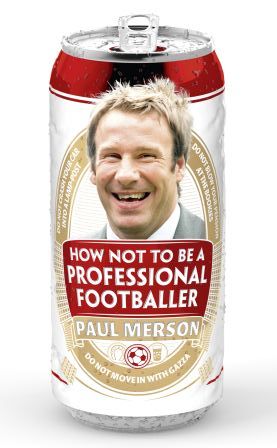
How not to be a professional footballer
Return to the book list for this category.
How not to be a professional footballer, Paul Merson with Matt Allen, London, HarperSport, 2011.ISBN 978-0-00-742496-2
The autobiography of Paul Merson is a tragic-comedy. At one level, Merson had an amazingly successful career, playing 20 years, gaining 21 England caps, winning two league titles, the FA Cup, the League Cup and UEFA Cup with Arsenal as well as two promotions to the Premier League and an FA Cup final appearance with other clubs.
On the other hand, he was addicted to alcohol, gambling and cocaine. He describes a crisis point: “At my lowest point as a gambler, the night before an away game for Aston Villa, sat on the edge of my bed in a Bolton hotel room and thought about breaking my own fingers. I was that desperate not to pick up the phone and dial in another bet. At that time in my life I’d blown around seven million quid with the bookies and I wanted so badly to stop, but just couldn’t.”
And again: “Off the pitch 1 was a nightmare, battling with drinking, drugging and betting addictions. I went into rehab in 1994 for coke, compulsive gambling and boozing. There were newspaper stories of punch-ups and club bans; divorces and huge, huge debts. I was a headline writer’s dream, a football manager’s nightmare, but I lived to tell the tale.”
One passage gives the reader an insight into some of the causes of his problems: “It’s a massive buzz playing football, especially when everything is new, like when I got my first touches against Man City at Highbury, or that goal at Plough Lane. The adrenaline that came with playing on a Saturday gave me such a rush. And if I scored, it was the best feeling in the world, nothing else came close. The problems started when I realised the buzz was short. I felt flat when I left the pitch, and I’d sit in the dressing-room after a game, thinking, ‘What am I going to do now? I can’t wait until next Saturday.’ And that’s where the drinking came in. It kept my high up…Boozing kept up the high of playing, the feeling of excitement I got when I scored goals for the Gunners. Gambling stopped the boredom in the hours between training and games and the boozer. And because I had an addictive, compulsive personality (as my doctors in rehab would tell me), I took to it like a duck to water”.
Merson was managing to get away with the drinking and the gambling. It was the cocaine addition that brought him to his knees.
As well as the rise and fall of Merson, the book gives interesting insights into the managers he played under. Chapter 12 on Arsene Wenger is fascinating. Similarly his admission that he was helped by Eileen Drewery when Glenn Hoddle brought her into the England set-up is both interesting and surprising.
|Almost at the end of the book he muses on how good he might have been if he had lived his life “like one of the Straight Batters” [Lee Dixon or Gary Lineker] but adds: “ I don’t have any regrets, though”.
The book is funny, sad, unbelievable and very readable