
If I had to choose between my wife and my putter... well, I’d miss her.
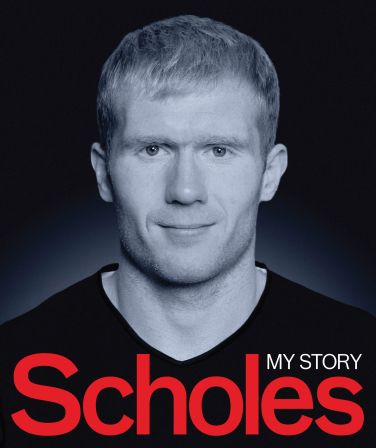
Scholes: My story
Return to the book list for this category.
Scholes: My story, with Ivan Ponting, London, Simon and Schuster, 2011. ISBN 978-0-86720-607-7
The book is a cross between an autobiography and a coffee-table book and seems to work as both. In seventeen chapters it takes the reader through the career of “the best midfielder of his generation” (Pep Guardiola). There is a least a picture a page, with Scholes commenting onthe picture, its significance, the memories it evokes or even his expression in it!
The book includes brief comments from over 20 people who have contributed to Scholes’s career – in some cases giving their (and an opposite) side to what is happening in a picture!
While everyone knows the names of David Beckham’s children, I suspect almost no one knows anything about Paul Scholes’s family life – the chapter on and photos of the family were of real interest.
Yet the book does reveal Scholes are one imagines him to me, for example, resenting the intrusion of the press into his private life while recognizing reluctantly “that it went with the new territory I was inhabiting”.
He is very conservative and is scathing about “the fancier strips which the club has adopted in recent times” wanting only to play in proper Manchester United colours. Similarly “Dropping England v Scotland is as bad as taking away the Grand National”.
He has nice things to say about everyone – well almost everyone: “There is barely a player I’ve encountered during my lifetime in football who hasn’t struck me as a fundamentally decent bloke, but one I’ve got absolutely no time for is Dennis Wise”.
Scholes retired from international football in his prime because he hated to be away from home. He says of the 2002 World Cup, that it “personified all I don’t like about international football – too much travelling, staying in a hotel an hour from the airport, flying here, there and everywhere for each game. Having such young children, being away from home for six weeks was no good for me. Some lads can cope, but it’s something I always struggled to deal with”.
He gives the inside story of the decision to retire last season, simply that he no longer felt his body was capable of playing at the level he wanted to and preferred to bow out at the top.
One sentiment he expressed interested me greatly, his striving for balance in life. He writes: “You can get upset and disappointed, but it’s only football and you have to keep some perspective” and again “I regret that a lot of the enjoyment has gone from the game because there is so much at stake financially these days. Everyone has become so professional and regimented that we’re almost like robots out there running around on the grass. There’s not much flair, there aren’t many players in the game today who just go out to have some fun. And that’s a pity”.
Paul Scholes was a very special player and his book is a cut above the average ghosted football autobiography.