
"Football is not a matter of life and death, it is more important than that."
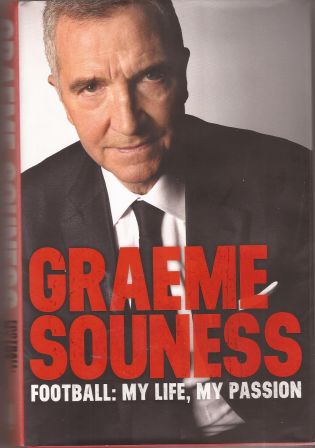
Football: my life, my passion
Return to the book list for this category.
Graeme Souness, London, Headline 2017. ISBN 978 1 4722 4252 5.
Graeme Souness was a great player, a Premier League manager and is now a pundit who talks a lot of sense. The strongest part of the book is his analysis of teams and situations, for example a comparison of Messi and Ronaldo, an analysis of Alex Ferguson’s success. He compares the great Liverpool team that he played in with modern day football, without a hint of things were better in my day.
His analysis of how the game has changed is really interesting.
Example 1: approach of coaches
Shortly after being signed for Liverpool and having been given no particular role in the team, he asked manager Joe Fagan and got the following reply: “’Eff off we’ve spent all this money on you and you’re asking me how to play football?’ with that, he turned and walked away”. As Souness says: “Can you imagine a manager saying that to any player today?”
Example 2: The focus on coaches not players: “After a game, if we hadn’t done well, the papers were full of ‘Souness didn’t do his job, Dalglish missed a sitter and Hansen was sloppy at the back.’ When do you read that today, it’s all about the manager - his tactics, his substitutions. Do you ever see players get any stick? They avoid any criticism”.
Example 3: Tactics. He recalls a European Cup (Champions’ League) game where just before kick-off, Bob Paisley (Liverpool manager) told Sammy Lee to go man to man on Paul Breitner. Souness adds: “It was the one and only time in my seven years at Liverpool that we did anything special tactically”. A modern coach would have had his team practising all week how to play against Breitner and other key opponents.
Example 4: need for instant success. He contrasts Liverpool in his day working 2-3 years ahead, bringing players in to spend a year looking around and learning about the club rather than coming straight into the first team, with the modern manager’s need to sign a player to score next week to keep his job.
Other striking insights and assertions include:
• German players are part of “a culture of taking responsibility” much more than British.
• Player power means that a manager who falls out with key players is likely to find his days numbered.
• “Arsène Wenger has kept his job at Arsenal, by finishing in the top four for the last 20 years until last season. If only the league winners qualified [for the Champions’ League], would he still be at Arsenal now?”
This is his comparison of his Liverpool team with the great Manchester United teams: “Of the title winners since, Fergie’s United were the closest to us in maintaining success over a period of time. In many ways, they were a better watch when they were flying, but we were better at keeping the ball than they were, which served us so well in Europe”.
A thoughtful book, well above average and easy to read.