
"Winning isn't everything; it's the only thing."
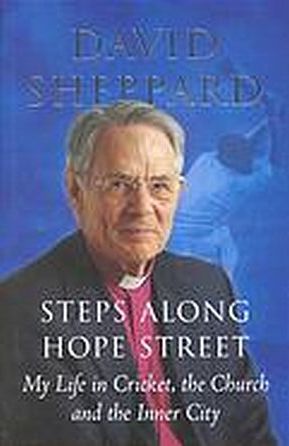
Steps along Hope Street
Return to the book list for titles beginning with 's'.
Steps along Hope Street, David Sheppard, Hodder & Stoughton , London 2002. ISBN: 0340861169
This is the second autobiography of David Sheppard, England cricketer and later Bishop of Liverpool.The other is Parson's pitch
There are some fascination reflections on being a high profile Christian sportsperson: "Sporting heroes are in danger of being lionised, and the Christian sporting heroes, invited to repeat their 'testimony', face the additional danger of becoming stuck. The danger was real enough for me, of repeating the story too often, and of giving out more than I took in. I kept a log of all my speaking engagements before ordination. There were 402 in a period of five years". Page 25
He describes being at a crossroads in 1953 before "that the best way to serve God would be to stay in cricket for some years and use the many opportunities to spread the faith which were coming my way". Page 26
He confirms the truth of one of those stories that has entered the language of cricket:
"I dropped two 'dolly' catches. Fred Trueman has made the most of these in after-dinner speeches. He says that when I dropped a catch off his bowling he told me he thought I should have learned more about putting my hands together". Page 74
His stand against apartheid is described - starting with a refusal to play against the South African team in 1960 in protest against the way apartheid brought injustice to cricket. He had asked Joost de Blank, Bishop of Cape Town if there would be any value in a public refusal to play. The Bishop replied "It would do a tremendous amount for our cause here". He adds that he had consulted the MCC who tried to dissuade him from any public statement. In the end he made a brief statement lasting less than a minute which was carried live on BBC News. Page 73-74 and 84.
In 1968 when the MCC tour to South Africa was cancelled because a team containing Basil D'Oliveira was not was not acceptable to the South African government, he became a leader of a group of MCC members who called for a Special General Meeting of the MCC to discuss the issue and later formed "The Fair Cricket Campaign". Looking back he comments: "We had broken assumptions that sportsmen would get on with the game without allowing religion or politics to raise questions about what we were doing". Page 88
Two other interesting moral issues are his condemnation of 'sledging' - verbal abuse that is aimed at intimidating the batsman (Page 17) and his argument for walking - dismissing yourself without waiting for the umpires's decision when you know you are out. Page 19.
A very interested if somewhat dated book.